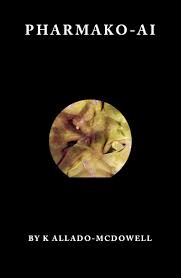

The AI Literature portal offers the first systematic mapping of literary works produced through human–AI collaboration. The term AI Literature designates an emerging literary category that includes works of prose or poetry in which writers integrate an artificial intelligence system – typically a large language model – into the creative process. It is not a matter of delegating writing to AI, but of entering into dialogue with, and at times critically confronting, a tool capable of producing language and articulating a specific perspective on reality.
The category is defined by three interrelated criteria, which also serve as the inclusion thresholds for works catalogued in this portal: collaboration as a sustained creative process; editorial legitimation, distinguishing AI Literature from generically AI-generated content; and an explicit authorial positioning – whether textual or paratextual – in relation to the broader cultural and ethical debate on artificial intelligence.
This is a young and rapidly expanding practice. While the corpus continues to grow, critical and theoretical frameworks remain scarce. The portal responds to a preliminary yet essential need: before analysis can take place, systematization is required. AI Literature has no established canon, and its boundaries are still being negotiated. Aggregating the corpus is therefore the first step toward enabling more rigorous theoretical and critical inquiry.
The AI Literature portal grows out of a research environment developed in recent years at Sapienza University of Rome, through activities and debates also carried out in collaboration with SIpEIA, the Italian Society for the Ethics of Artificial Intelligence. The project is coordinated by a core research team responsible for scientific oversight and supported by a group of occasional collaborators who assist in preparing individual entries.
The portal is organized into several sections. The “Catalogue” brings together individual entries for each work, including bibliographic data, technical information on AI tools and methods of interaction, content descriptions, notes on authorial poetics, and work-specific bibliographies. The “Bibliography” collects general critical contributions on AI Literature and is continuously updated as new scholarship appears. The “News and Events” section reports on conferences, seminars, public debates, and other developments in the field. The “Contribute” section allows users to submit proposals to the portal: new AI Literature works for potential inclusion in the Catalogue, bibliographic references to be added to the Bibliography, and upcoming or recent events to be featured in the News and Events section. Proposals will be evaluated against the criteria outlined above for classification as AI Literature.
THE TEAM
Coordinator: Daniel Raffini
Research Group: Tiziana Catarci, Annamaria Elia, Francesca Medaglia, Francesca Pantano, Francesca Pichirallo